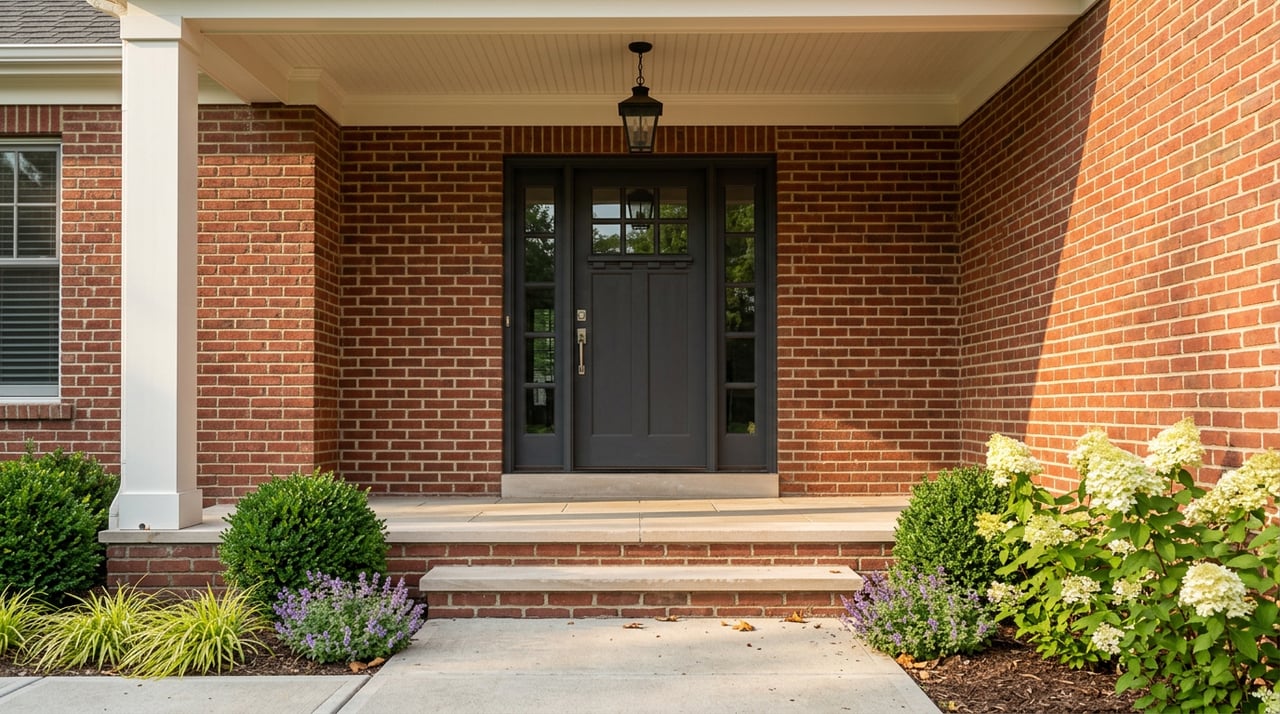
What a Newburgh Address Buys in 2026 Across 3 Markets
Two buyers open the same MLS search set to "Newburgh, IN." One sees a two-bedroom cottage a block off Water Street listed under $250,000. The other sees a five-bedroom Copper Creek build asking north of $1.1 million. Same filter, same mailing address, same school corporation attendance possibility depending on the parcel. Very different transactions.
That gap is the whole story of buying in Newburgh right now, and the "median price" you saw on a national portal quietly hides it.
Look at three numbers side by side.
Zillow's Home Value Index for Newburgh sits at $313,175 as of June 2026, up 3.0% year over year, with homes going to pending in roughly seven days. A local MLS pull from late April 2026 showed 123 active Newburgh listings, an average of 83 days on market, and a median list price of $425,000. Homes.com puts the average sale price at $432,472 across 563 transactions in the trailing twelve months. For contrast, Redfin's February 2026 read on Vanderburgh County, right across the line, showed a median sale price of $209,000, up 7.2% year over year.
None of those Newburgh numbers are wrong. They measure different things. The ZHVI weights the entire stock of housing, including modest older homes that rarely trade. The MLS median list reflects what is actually for sale right now, which skews newer and larger. The 12-month average sale price sits between them because closings mix both.
The Zillow Home Value Index for Newburgh is $313,175, up 3.0% over the past year with homes going to pending in around 7 days. A late-April 2026 MLS snapshot showed 123 listed homes, 83 average days on market, and a $425,000 median list price. Homes.com reports an average home price of $432,472, with 563 homes sold in Newburgh over the trailing twelve months. In February 2026, Vanderburgh County home prices were up 7.2% compared to last year, selling for a median price of $209K.
The takeaway for a serious buyer is simple. A "Newburgh" filter is not one market. It is three, layered on top of each other, and the median you quote at dinner depends entirely on which one you happen to be looking at.
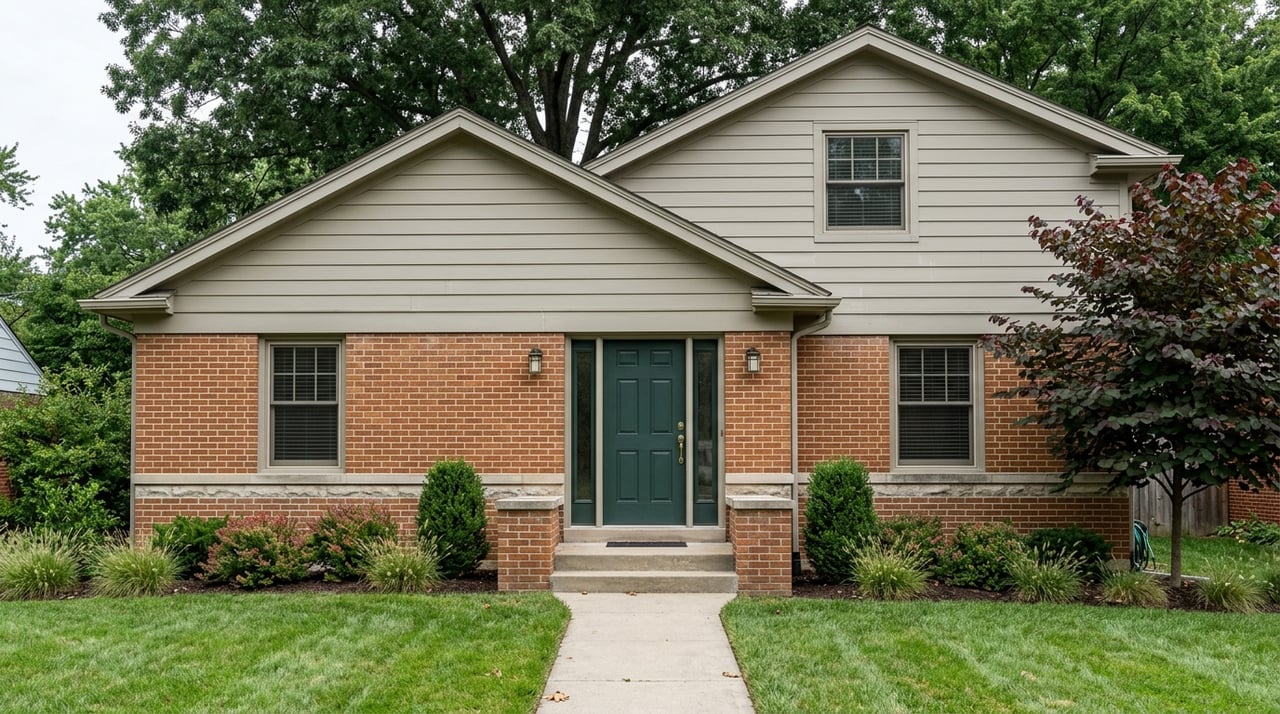
The incorporated town proper is the small footprint centered on Water Street and Jennings, and it behaves like an older river settlement because that is what it is. Originally called Sprinklesburg, the community grew to be the largest riverport between Cincinnati and New Orleans by 1850. The housing stock is a mix of Craftsman, cottage, and mid-century infill on tight lots. Walkability is the product. You are within a few blocks of Cleo's Bakery, Café Arazu, the Newburgh Theatre, Old Lock & Dam Park, Overlook Park, and the Rivertown Trail. Saturday mornings mean the farmers' market from May through September.
Two frictions to know before you write an offer here. First, older homes bring older systems, and the operating cost math is different than a 2018 build in a subdivision. Second, parcels closest to the river along Water Street sit in or near mapped floodplain. That is a lender conversation, not a deal-killer, but it drives insurance and disclosure.
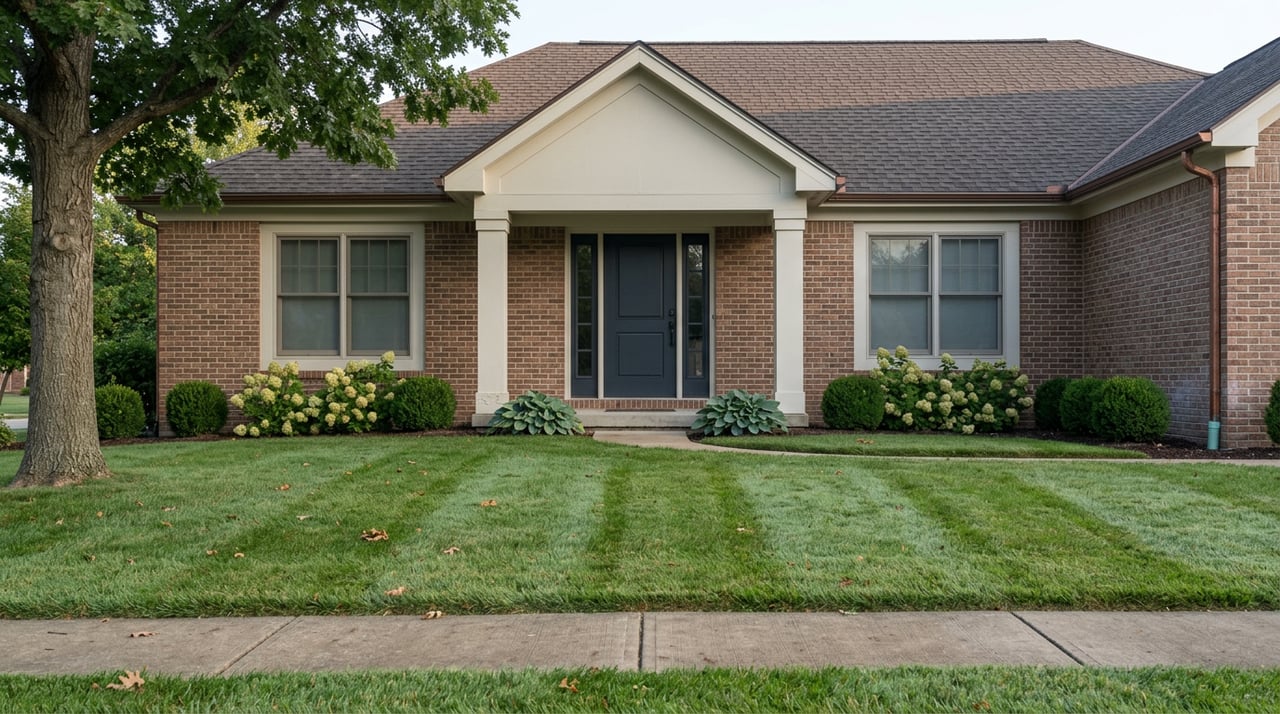
Most of what people call "Newburgh" is actually unincorporated Ohio Township, stretched between State Road 66 and State Road 261. This is where the bulk of the inventory lives. Established subdivisions like Berkshire, Essex at Berkshire, Prestwick, and the Lexington brownstones anchor the range roughly from the mid-$270s into the mid-$500s, with move-up product filling in above that.
Entry-level homes start around $275,000 in established neighborhoods, while luxury estates in subdivisions like Berkshire frequently exceed $750,000. Lot sizes are conventional suburban, HOAs are modest to moderate, and the commute to Deaconess Gateway or downtown Evansville runs I-69 or SR 66. This is where the ZHVI number feels most honest.
The third Newburgh is the newer luxury layer built out over the past decade along Frame Road and around the Victoria National and Copper Creek addresses. Product here is custom or semi-custom, lots are larger, and amenities are meaningful line items. While the median sale price is close to $380,000, waterfront properties and custom-built homes in subdivisions like Copper Creek typically range between $800,000 and $1.3 million. HOA fees in premier subdivisions like Victoria National and newer builds along Frame Road can range from a modest $200 annually to over $1,200 depending on whether the community provides pools, gated security, or private lake maintenance.
This tier drags the average sale price up and pushes days on market longer because the buyer pool is thinner.
| Sub-market | Typical price band | Product | Carrying-cost quirk |
|---|---|---|---|
| Historic town | Roughly $200K–$450K | Older cottages, Craftsman, small infill | Older systems, potential floodplain near Water Street |
| Castle corridor | Roughly $275K–$550K | Established subdivision, brick and frame | Modest HOA in some pockets, standard suburban ops |
| New-build belt | Roughly $600K–$1.3M | Custom, semi-custom, larger lots | HOA up to $1,200+, longer marketing time, thinner buyer pool |
The point of the table is not the exact edges. It is that a buyer comparing a $425,000 Prestwick home to a $425,000 Water Street home is not comparing two versions of the same product. They are comparing two products that happen to share a ZIP.
Price band is only half the equation. The carrying-cost stack differs meaningfully across the three sub-markets, and it is where portal comparisons quietly break.
Property taxes first. Warrick County historically offers a lower tax threshold than Vanderburgh County. That gap matters most on the move-up ticket, where a fraction of a point on effective rate compounds into real monthly dollars. If you are cross-shopping a north-side Evansville home against a Castle corridor home at the same list price, the monthly carry is not identical.
HOA layering is second. Historic town buyers rarely pay HOA. Castle corridor buyers sometimes do, in modest amounts. New-build belt buyers almost always do, and the range is wide enough that you should ask for the current dues schedule and reserve study before you write, not after.
Utilities and mechanicals are third. Indiana's humid summers and freezing winters mean HVAC systems work hard year-round, and budgeting roughly $250 to $350 monthly for combined utilities is a safe bet for a 2,000-square-foot home. An 1890s cottage and a 2022 spec home hit that band from opposite directions, one with drafty envelope and the other with more square footage to condition.
Commute distance is the fourth variable, and it is more consistent than buyers expect. Warrick Area Transit System provides bus service, connecting Newburgh to Chandler and Evansville, with major employers like Deaconess Gateway Hospital and Ascension St. Vincent Evansville located within about 6 miles. Whether you land in the historic town or a Frame Road build, the two largest healthcare employers are within roughly the same drive.
If the thesis of this piece is that the mailing address hides three markets, the practical move is to read every "Newburgh, IN" listing with three questions.
First, where is the parcel actually located. Pull the address on a county GIS map. Is it inside the incorporated town, in Ohio Township, or in the newer belt near Frame Road? That single answer reframes the comp set.
Second, what is the true operating cost. Ask for a full year of utility bills, the HOA dues schedule and any pending assessments, and the property tax card. A $425,000 asking price with a $1,100 HOA and 1997 mechanicals is not the same transaction as a $425,000 asking price with no HOA and a 2019 build.
Third, what does the comp math actually say. A pending-in-seven-days ZHVI reading does not mean your specific listing will move in a week. Newer luxury product routinely sits longer, and the 83-day average DOM in the April MLS snapshot reflects that mix. Ask your agent to pull comps by sub-market, not by ZIP.
Is "Newburgh" always inside town limits? No. Most homes marketed as Newburgh sit in unincorporated Ohio Township. The mailing address is shared. Zoning, services, and some tax treatment are not.
Why does the same portal show two different median prices for Newburgh? Because different index methodologies weight different slices of the housing stock. ZHVI weights all homes. MLS median list weights what is actively for sale. Trailing-12-month averages weight what closed. All three can be accurate at once.
Do all Newburgh addresses have the same flood exposure? No. Exposure clusters along the river and low-lying pockets near Water Street. Most of the Castle corridor and the new-build belt sit well outside mapped floodplain, but every specific parcel deserves its own check.
Should I expect an HOA? Depends on the sub-market. Historic town: rarely. Castle corridor: sometimes, usually modest. New-build belt: almost always, and the range is wide.
Newburgh is one of the strongest boutique markets in the region because it holds three different products on the same mailing address. That is a feature for buyers who know what they want, and a trap for buyers who compare portal medians without asking which Newburgh those medians describe.
If you are early in a search and want the sub-market read on a specific street or subdivision before you tour, Jason Brown and the team at Pinnacle Realty Group will pull the comp set that actually matches the home, not the ZIP. Start your search with our local experts, and bring the address.


We pride ourselves in providing personalized solutions that bring our clients closer to their dream properties and enhance their long-term wealth. Contact us today to find out how we can be of assistance to you!